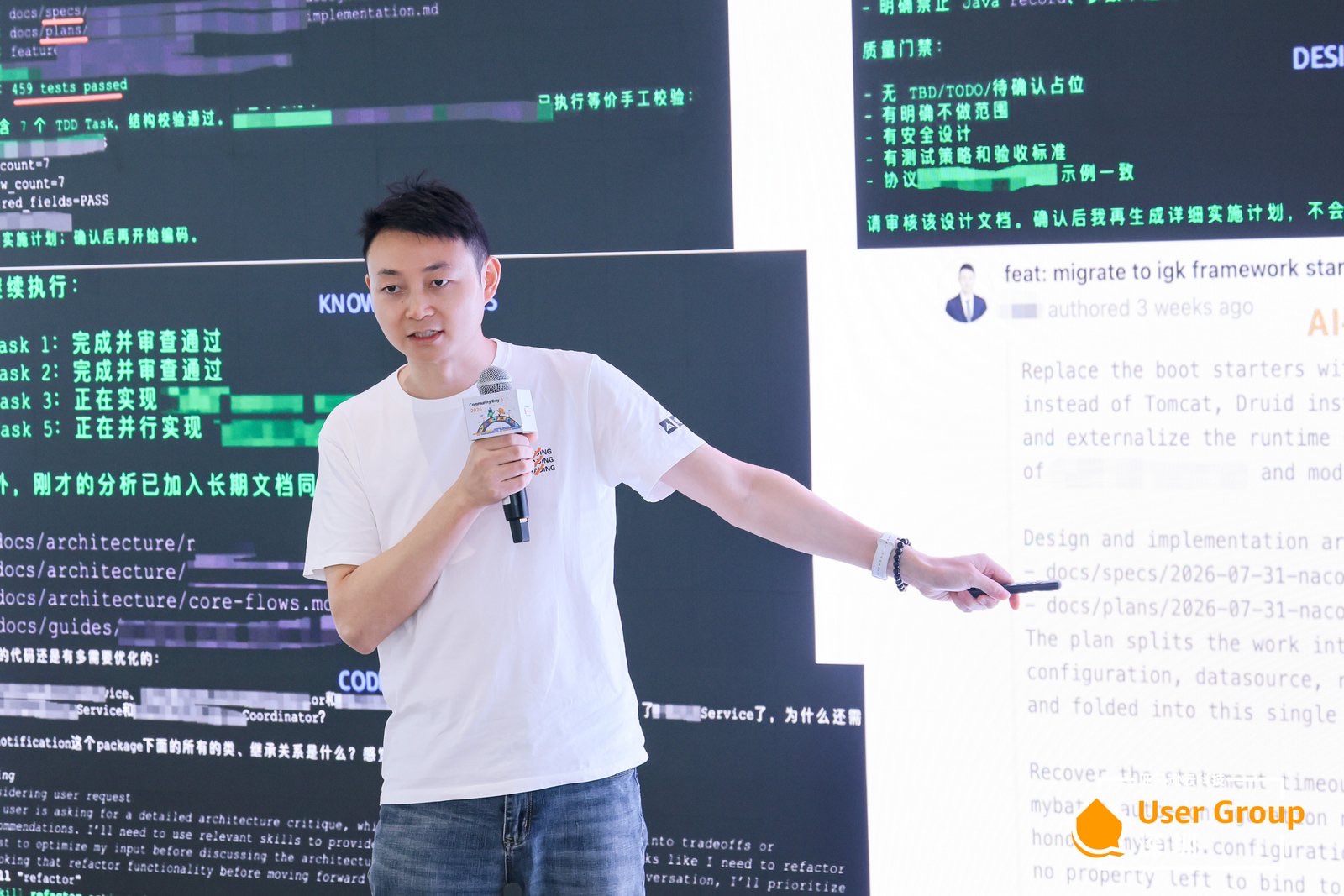
Most teams treat a legacy service as a black box they are afraid to touch. This talk is the opposite: a two-year-old Java/Spring Boot microservice, running in production across three ends — mobile app, vehicle, and cloud — with no documentation at all and zero tolerance for downtime, taken apart and rebuilt with AI agents.
The original Chinese title was 技术债的尽头是 AI:一个微服务从零文档到知识库的重构之路. The English version keeps the part that matters: the debt was never the code. It was the missing knowledge.
What the talk covers#
- How to build system comprehension in a codebase nobody documented, using AI agents as readers before using them as writers.
- A 13-step flow borrowed from Kiro’s design philosophy — understand, define, rebuild, deploy — with the actual git commits and knowledge-base layout shown on screen.
- The “athlete and referee” pattern: separate agents for producing changes and for judging them, so the model that writes the code never grades its own homework.
- Which steps should stay manual. The honest answer is not “let the agent do everything.”
The numbers, as presented#
| Measure | Planned | Actual |
|---|---|---|
| Coding | 1 week | 4 hours |
| Integration testing | 1 week | 2 days |
| First integration pass | — | 20 minutes, 90% of features verified |
| Bugs found | — | 2, both human error |
| Pitfalls documented | — | 5 |
The talk deliberately keeps the failures in. A report that only shows the wins is marketing, not engineering.
The conclusion I actually wanted to land#
Process, not the model, is where the safety comes from. The 13 steps would work with Kiro, with Qoder, or with a plain chat window. The harness is the asset; the model is swappable. That is also why the same flow is reusable on the next legacy service instead of being a one-off story.
Photos from the session#
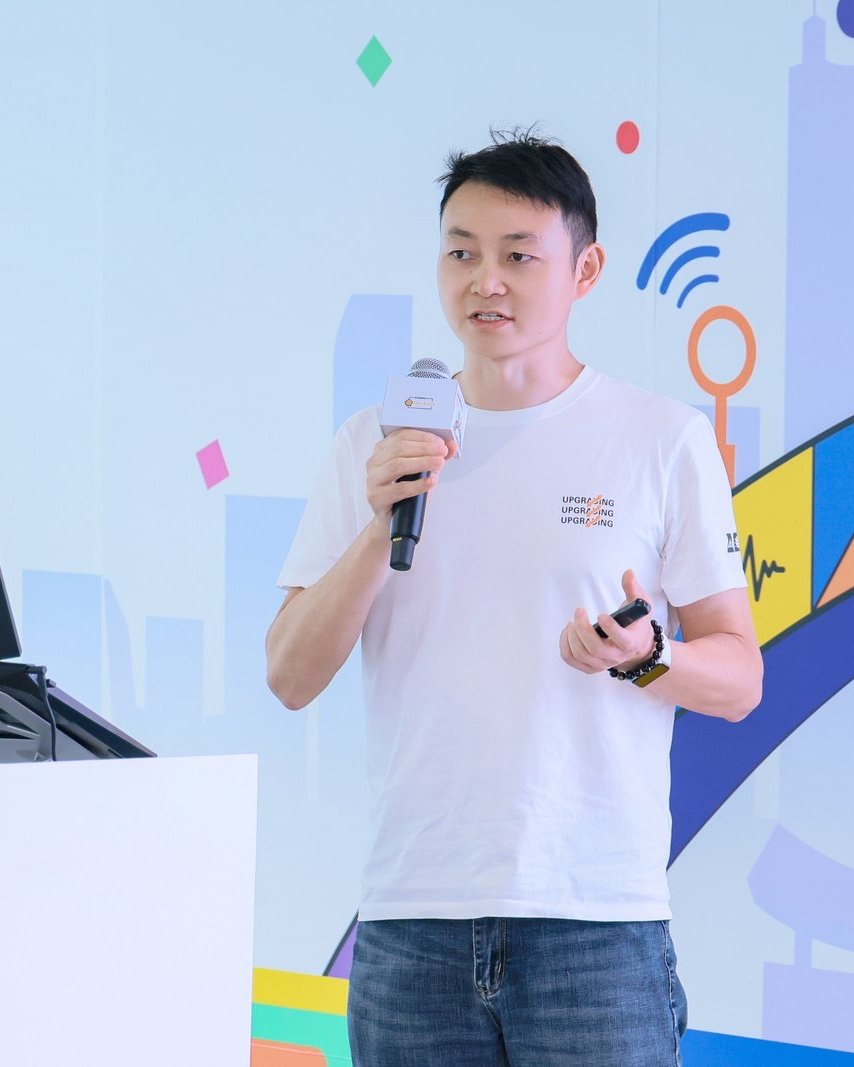
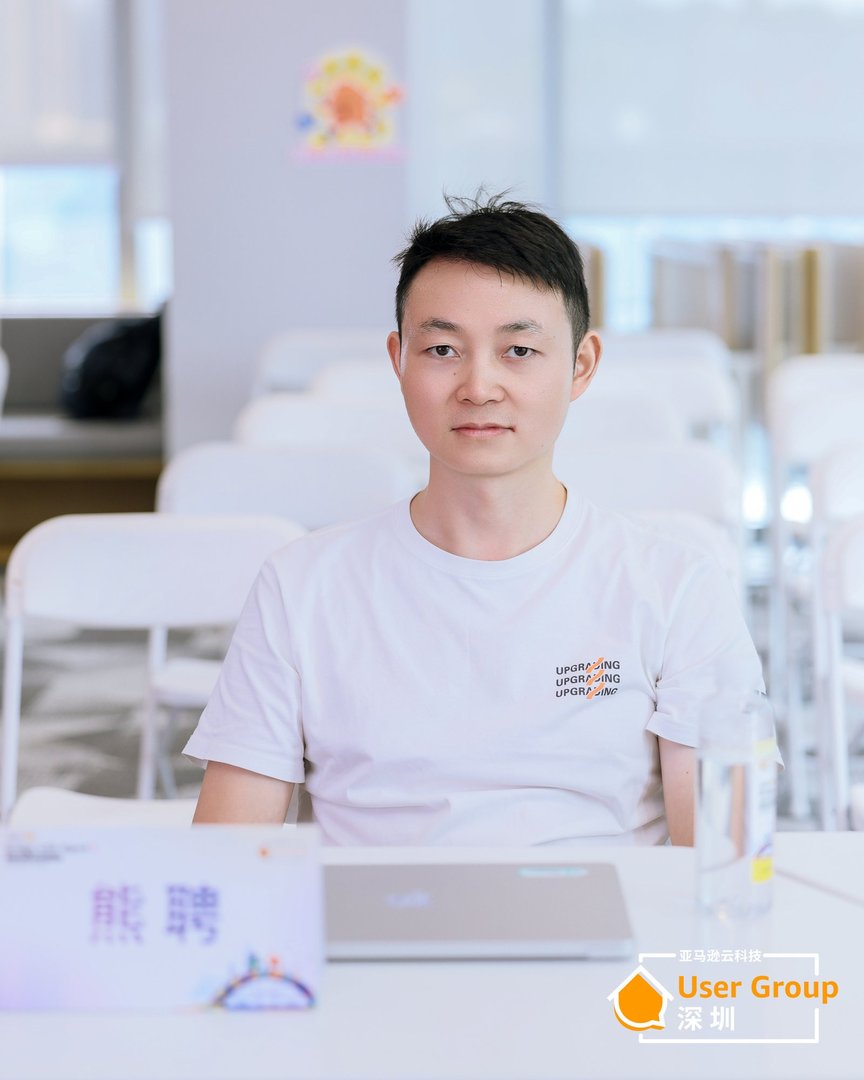
Three frames, three distances: the room, the talk, and the table.

Slides and recording#
Slides are being cleaned up for publication. If you want the deck or the 13-step checklist before then, email me at pinxiong.cn@gmail.com and I will send it over.
The written version of this talk is a series on the blog: start with AI Coding in practice: rebuilding a zero-docs microservice.